On-site | Angelalign Technology Inc. A-TECH 2026: Three New Products, How to Address Clinical Challenges for Doctors
 |
# Preface
In the evolutionary history of dental medicine, efficiency bottlenecks often stem from the generation gap between the "complex evolution of clinical needs" and the "lagging updates of existing tools." When the diagnosis and treatment chain lacks targeted breakthrough tools, doctors have to rely on their personal experience and energy to fill those technical gaps.
As the boundaries of invisible orthodontic treatment continue to expand, this gap between tools and needs is occurring in every core clinical scenario: in cases with low occlusal height, bite plate aligners often fail to stabilize; for deep overbite with large overjet, there has always been a lack of suitable bite ramps; modifying a treatment plan takes one or two days waiting for a designer, and comparing extraction versus non-extraction options can consume half a month. Behind all this lies a series of clinical "tough nuts to crack."
In June this year, Angelalign Technology Inc. held the 12th A-TECH Conference in Wuxi. Three new products, three major challenges — the stability of mandibular advancement, the bite ramp tool for deep overbite with large overjet, and the time doctors spend on plan modifications — were addressed one by one. These challenges are not new, but dedicated solutions have been lacking.
This year, we went to the scene to see what answers they delivered. Here is the report:
## A6 Dual-Guide Bite Ramp System: Stabilizing Mandibular Advancement Even with Low Occlusal Height [BLK_SEQ] Let's start with the pain point. Mandibular retrusion type Class II malocclusion is not uncommon among adolescents during the growth period, and it typically requires capturing the peak growth period and guiding correction through mandibular advancement. However, commonly used bite plate aligners have a rigid limitation — a "minimum occlusal opening height" must be maintained. For high-angle cases or those requiring only a low occlusal opening height, this threshold often forces doctors to compromise. Additionally, the stability of the mandibular position in the early advancement phase, control of lower anterior tooth torque, and the efficiency of later occlusal reconstruction are three major clinical hurdles.
A6 is not a new name. It was launched by Angelalign Technology Inc. in 2015 as the industry's first invisible mandibular advancement solution. Its bite ramp, which guides the mandible forward, has evolved over more than a decade — from manual bite ramps to adaptive bite ramps and then to fishbone bite ramps. The key to this upgrade is the addition of a lingual guide ramp alongside the fishbone bite ramp.
Dr. Song Fang, who presented the upgraded A6 at the conference, reviewed the development process: the team first tried buccal side wings, but they took up space, easily caused cheek biting, and lacked sufficient strength — that path was a dead end. Later, they turned their attention to the natural lingual space between the first premolar and the canine, integrating the occlusal bite ramp and the lingual guide ramp into a single-piece structure — which not only reinforced strength but also made it more compact, occupying less lingual space.
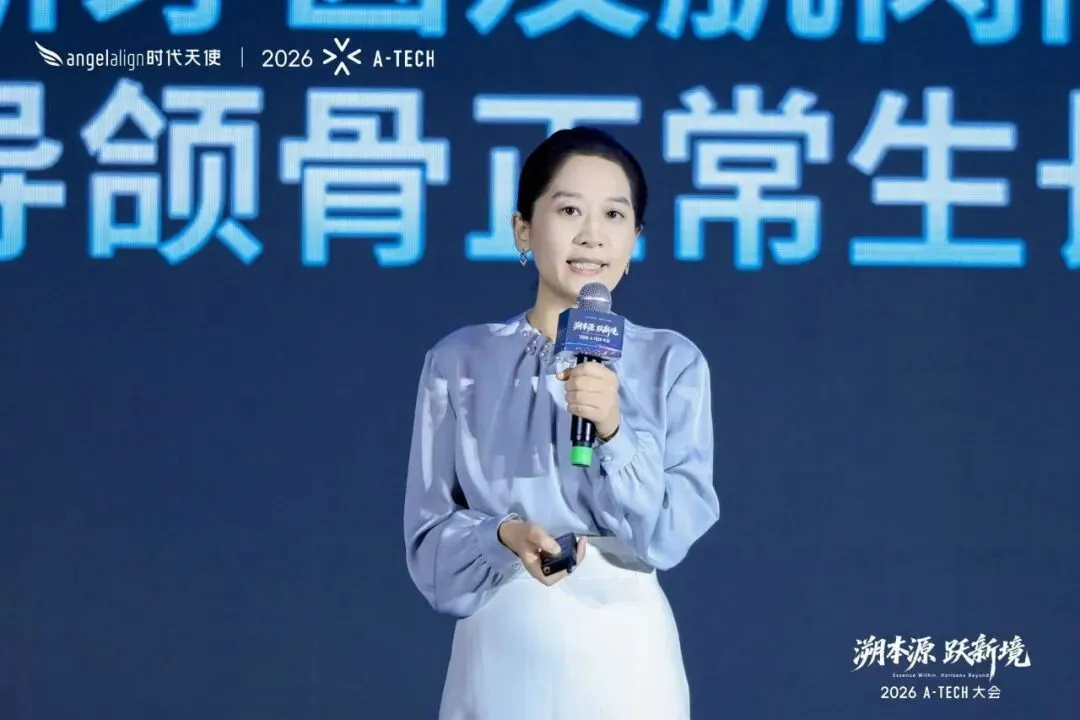 |
| Dr. Song Fang |
This is the origin of the "Dual-Guide Bite Ramp System." Under conventional occlusal opening heights, the upgraded fishbone bite ramp is wider, provides more complete occlusal contact, and has enhanced structural strength, making it less prone to "collapse" in the early advancement phase. For cases requiring low occlusal opening, the system automatically activates the lingual guide ramp, which works in coordination with the fishbone bite ramp to provide three-dimensionally stable guidance in the transverse, vertical, and sagittal planes. Combined with strategies such as staged advancement, according to Dr. Song Fang's introduction at the conference, previously challenging situations — "low occlusal opening height, unfavorable for high-angle cases" — will gradually be brought within the clinical scope of A6.
Dr. Song Fang also shared a case of a 9-year-old boy: first, about 5 months were spent correcting arch constriction and improving deep overbite, removing factors that interfere with growth and development, before fitting the A6 Dual-Guide Bite Ramp. Under low occlusal height, the lingual guide ramp stably maintained the advanced mandibular position throughout, with no collapse or fracture. Comparing before-and-after treatment images shown at the conference, both the child's facial profile and occlusal relationship showed significant improvement after advancement.
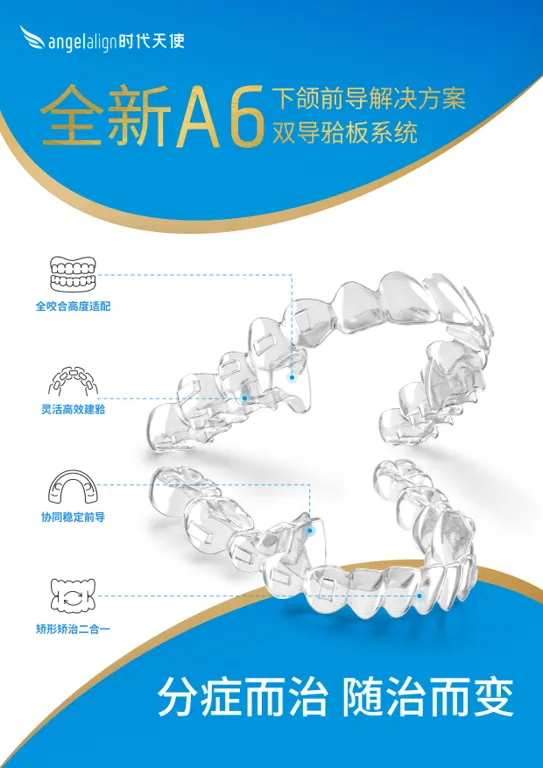 |
| New A6 Mandibular Advancement Solution – A6 Dual-Guide Splint System |
So what A6 aims to achieve this time is not to be "stronger," but to make mandibular advancement more stable, covering more of the real-world cases that doctors encounter.
## A11 Deep Overbite Solution: Filling the Tool Gap for Deep Overbite with Large Overjet
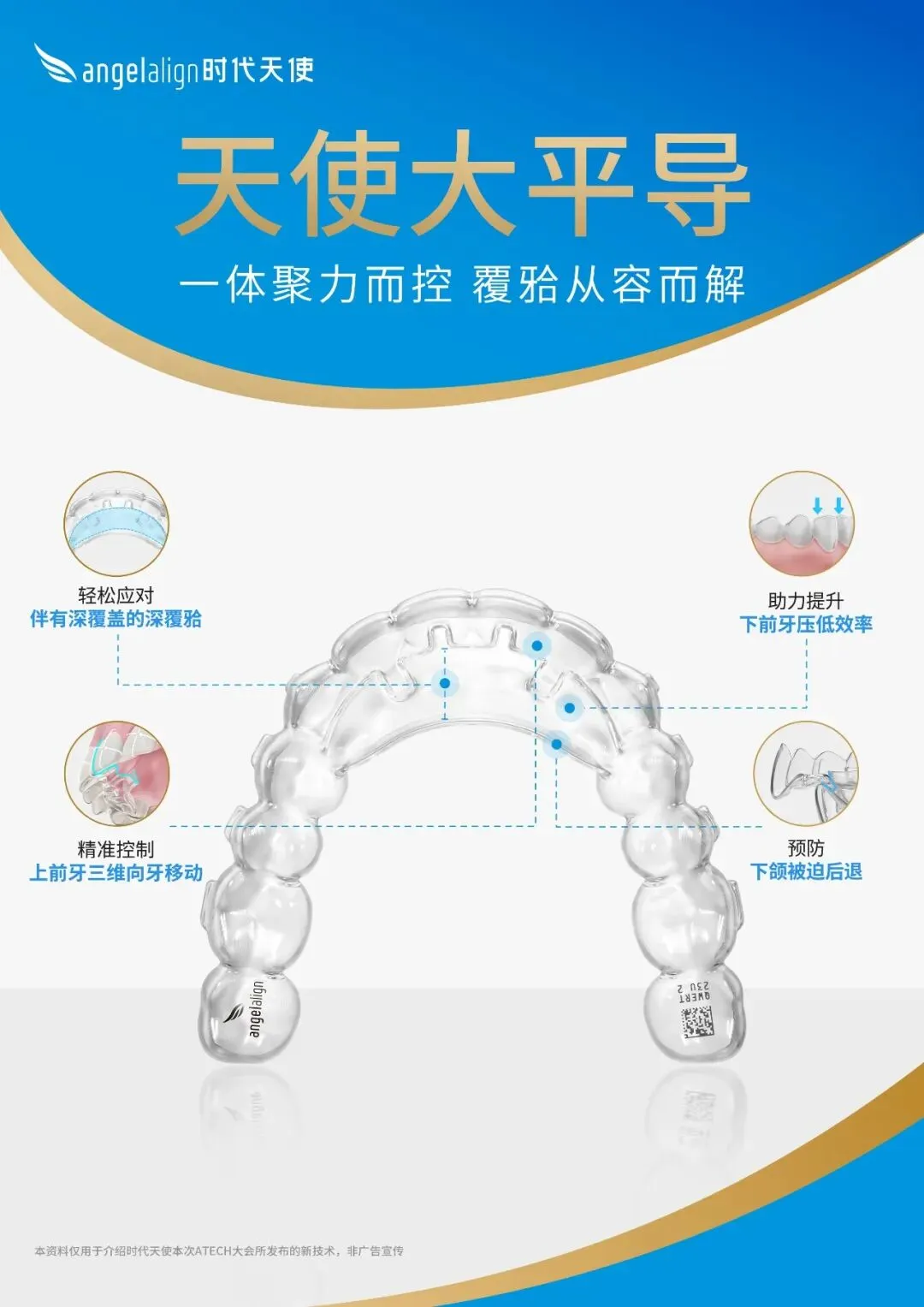
If A6 addresses "stabilizing mandibular advancement," A11 tackles another long-standing problem. Among deep overbite cases, a significant proportion are accompanied by large overjet — this is a typical manifestation of Class II malocclusion, with the two often coexisting. The commonly used invisible flat bite plane and curved bite ramps have limited coverage, and the most frequent feedback received from the backend is "can the bite ramp be made a bit longer?" Many deep overbite cases with large overjet indeed lack a suitable bite ramp.
Simply making the bite ramp larger sounds like a straightforward idea, but problems arise immediately. Dr. Cao Cen, who presented A11, explained the difficulties: once the lingual side of the upper anterior teeth loses the wrap of the aligner, control decreases significantly; and a large-span flat plane is prone to deformation under occlusal forces.
The breakthrough came from an unexpected source. The team ultimately found inspiration in the groove and annular rib structure used to reinforce aircraft luggage racks — the "Angel Large Flat Bite Plane" uses two reinforcing bodies to enhance overall rigidity, designs grooves on the lingual side of the upper anterior teeth to restore wrapping force, offers both semi-anatomical and non-anatomical occlusal surface forms, and incorporates a limiting ridge structure at the posterior edge. This reduces the risk of forced mandibular retrusion through both physical interception and sensory cues.
What it needs to balance is effectiveness, safety, and comfort: better intrude lower anterior teeth, achieve controlled root retraction, maintain three-dimensional control of the upper anterior teeth, while minimizing impact on the tongue and pronunciation. According to the materials, with the Large Flat Bite Plane filling the gap for "deep overbite with large overjet," Angelalign Technology Inc.'s deep overbite tools — including the invisible flat bite plane, curved bite ramp, Large Flat Bite Plane, along with AngelButton and Angel Hook — now cover different types of deep overbite cases, from high-angle to average/low-angle, and from small overjet to large overjet.
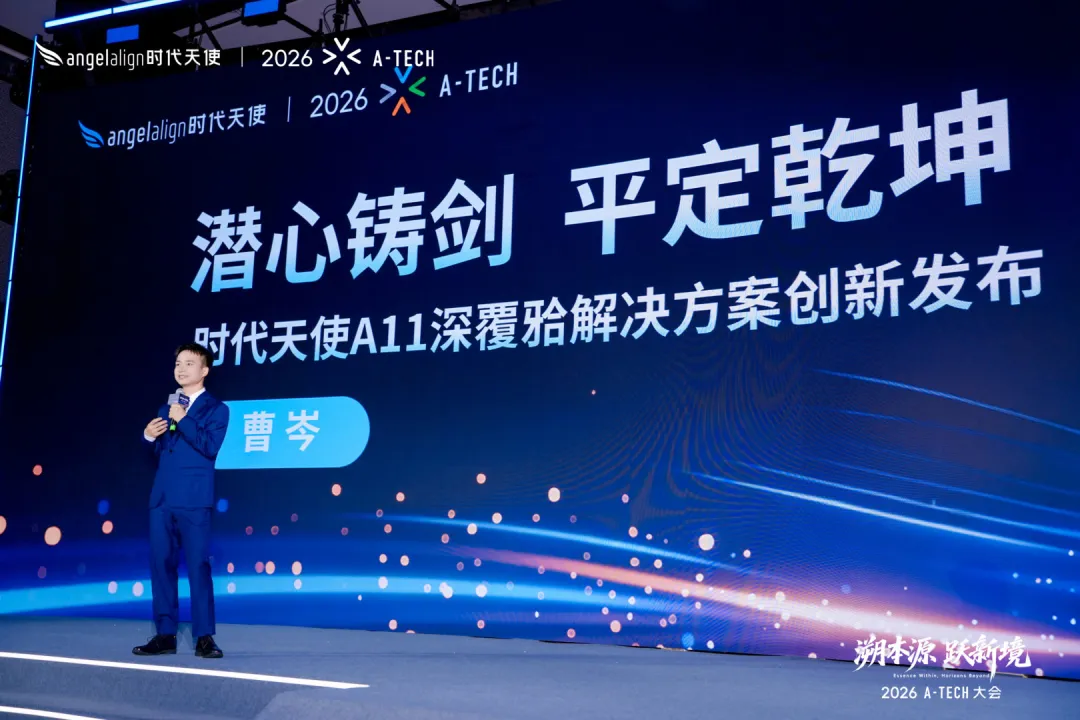 |
| Dr. Cao Cen |
## iOrtho 2026 and the Angel Smart Assistant APP: Freeing Doctors from Repetitive Work
 |
| New A11 Deep Overbite Solution |
While the first two new products focus on "how teeth move," iOrtho 2026 shifts to another battlefield — the software and services that doctors interact with daily.
According to Dr. Cao Yang, who demonstrated iOrtho, the direction of this upgrade came from two recurring demands identified in extensive doctor interviews: first, a desire for a cleaner iOrtho interface; second, a need for smarter iOrtho functions.
The upgrade of iOrtho 2026 is precisely about optimizing these aspects and empowering them with AI.
First, a complete interface reorganization: the workspace, patient details page, and 3D plan interface have been restructured, with six major functional modules aggregated onto a single page. Data for the same case, once uploaded in any module, does not need to be re-uploaded.
 |
| Dr. Cao Yang |
Next, two new AI capabilities:
Angel Smart Assistant: An orthodontic AI assistant trained on the case database. It can help doctors extract information and prepare for follow-up visits through a Q&A format. It can also set up "Smart Briefings" that actively push information based on trigger conditions specified by the doctor, sending reminders via Web, WeChat, and the APP. This feature will be gradually rolled out at the end of July.
iMod Intelligent Modification: Launched globally for the first time in Wuxi, this feature allows doctors to modify 3D plans using natural language. A simple spoken command like "Align based on tooth 41" enables the system to automatically perform retraction, coordinate upper and lower arches, maintain occlusal relationships, and even switch between extraction and non-extraction plans. A new plan is generated in an average of about 30 seconds, covering most common target position modifications, especially excelling at large-scale changes that previously required waiting one or two days.
The underlying algorithms have also been upgraded simultaneously: cephalometric analysis now includes airway analysis; model measurement has optimized indicators such as arch width, overbite, and overjet; the IRS V3 Intelligent Root-Bone System can differentiate between cancellous and cortical bone, the maxillary sinus, airway, and condyle, and display them in conjunction with the original CBCT.
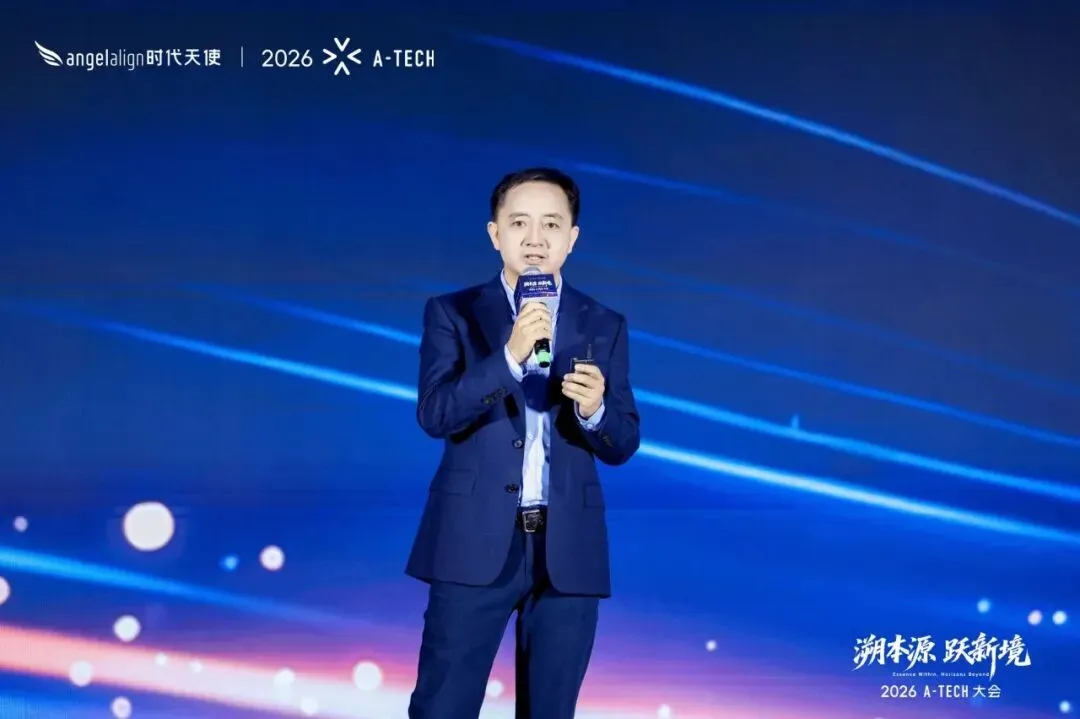
The reason these capabilities can be accumulated year after year is the unified support at the foundation — as CEO Mr. Hu Jiezhang introduced at the conference, the underlying engine, masterEngine, consolidates data from over 2 million cases and multi-modal data, forming a digital base that covers the entire invisible orthodontic chain. This is also why iOrtho's capabilities can be iterated annually and continue to innovate.
Beyond the software, the patient side has also been integrated this time. MOOELI, designed for patients, has been relaunched under the new identity of the "Angel Smart Assistant APP" — orthodontic treatment can last from a few months to several years, and doctors cannot monitor the entire process. This APP aims to fill that gap.
 |
| Mr. Hu Jiezhang |
It delegates tasks that previously relied on repeated doctor reminders to the system as much as possible: full-cycle patient education is built into the APP, allowing patients to resolve common questions on their own; wearing and follow-up visit reminders are delivered through multiple channels; and a check-in points system with rewards turns "doctor reminders" into "patient willingness to comply." Currently, the MOOELI photo task has been launched first.
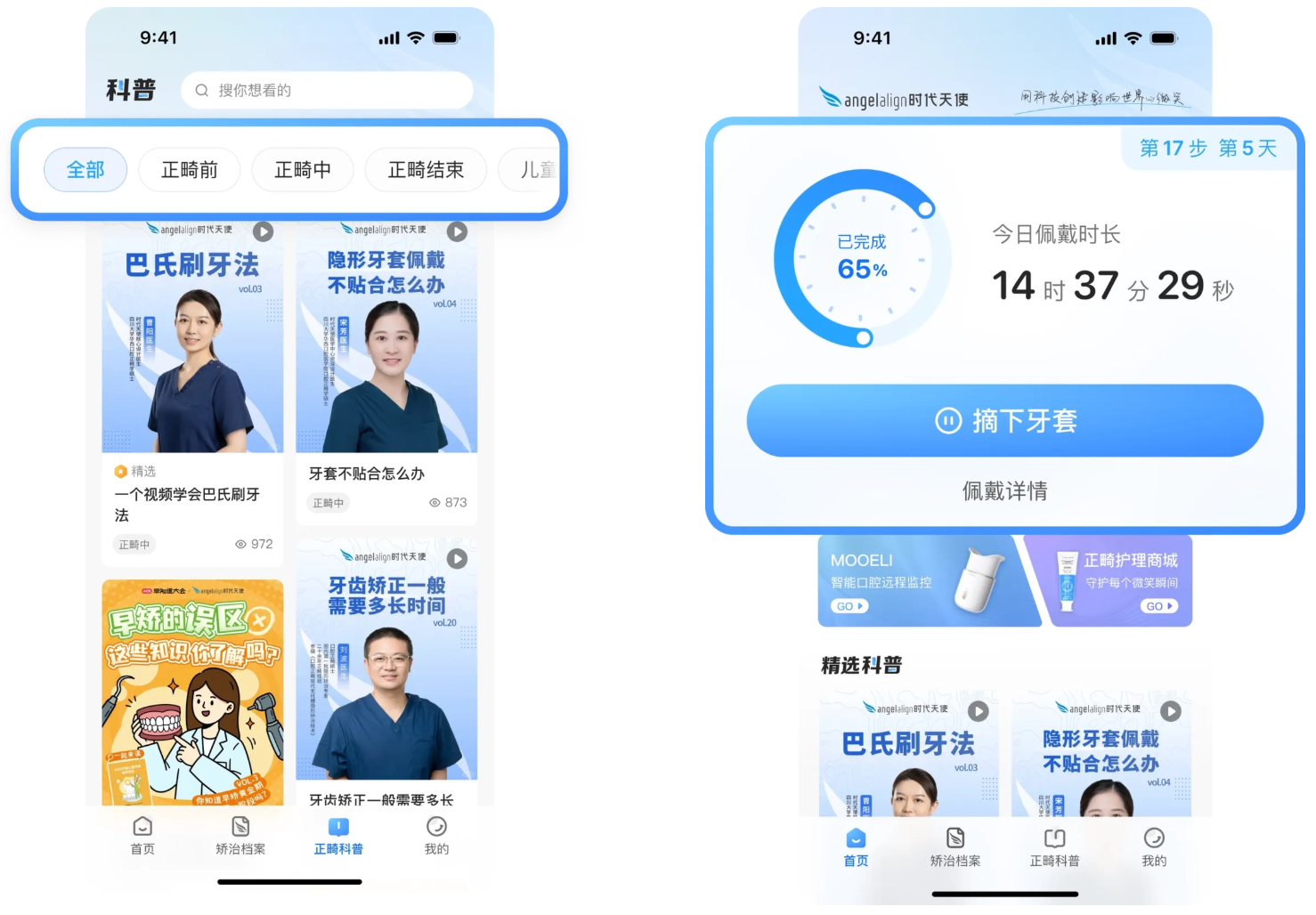 |
More critical is the clinical supervision during clear aligner treatment — patients perform intraoral scanning at home using their phones, and AI judges in real-time whether the aligners fit properly, are worn correctly, and whether there are any intraoral risks, issuing alerts for abnormalities. For complex or high-risk cases, the medical team intervenes for a secondary review, adding a layer of human quality control on top of AI.
Beyond quality control, the APP also extends to the patient side: patients can see their treatment progress, doctor's instructions, and current wearing instructions at any time, and use new fun notes to record changes before and after treatment. In Dr. Cao Yang's words, these features all ultimately point to the same goal: allowing doctors to focus their energy on clinical judgment itself.
## A Restrained Boundary: Data is the Means, Medicine is the Essence
The three new products represent innovations in different dimensions, but they share the same underlying R&D logic — the synergistic support of three major platforms: artificial intelligence and big data, biomechanics, and material technology.
However, throughout the entire conference, what was more noteworthy were the remarks from three individuals. They were not talking about technical parameters, but a common proposition: the line between what technology can do and what doctors should retain.
In his opening speech, CEO Mr. Hu Jiezhang traced the starting point of innovation back to the clinical scene — not a flash of genius or the pursuit of a technical concept, but the excavation of one clinical pain point after another from the real diagnosis and treatment chain. After collaboration among medical, R&D, software, and other teams, and repeated validation using a large number of cases and evidence-based medicine, these become mature products in the hands of doctors. The single goal is to create clinical value for doctors.
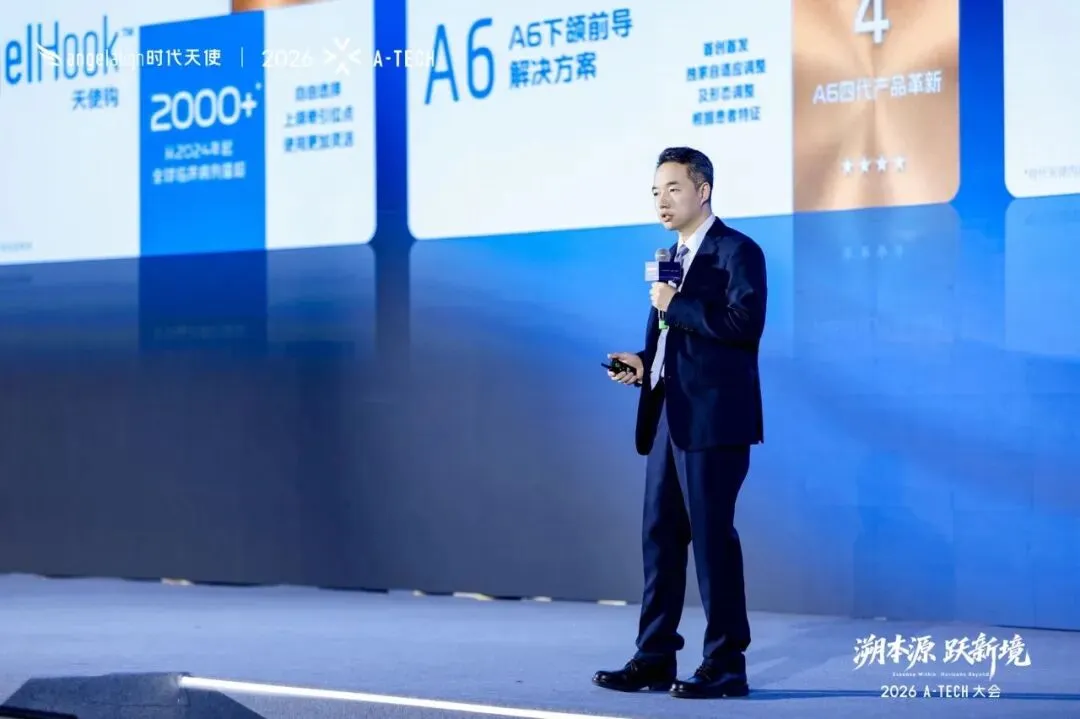
Chief Medical Officer Dr. Liu Weitao revealed Angelalign Technology Inc.'s R&D confidence through a set of numbers and 10 case studies: the global cumulative production of aligners has exceeded 300 million, AngelButton has been clinically applied over 100 million times, and the ICS Cephalometric Measurement System has been used over 2.4 million times... Behind this lies Angelalign Technology Inc.'s massive clinical application experience accumulated over more than 20 years of deep involvement in the industry. In Dr. Liu Weitao's view, the essence of innovation is to precipitate clinical experience into technical capabilities, and then transform those technical capabilities into treatment plans that are usable for doctors and beneficial for patients. The reverence for medicine and thorough validation are the sources of certainty for Angelalign Technology Inc.'s continuous innovation.
Dr. Cao Cen gave an example during the A11 launch: the system can identify similar cases from a database of over 2 million cases and recommend tooth movement patterns, but the decision-making power to adjust and choose always remains in the doctor's hands.
The three speakers had different emphases, but they all pointed to the same thing: in a field where technological iteration is constantly accelerating, data and AI are tools, while medical judgment is the foundation. What is left to algorithms, and what must be kept firmly in the doctor's hands — the way this line is drawn defines a medical company's product philosophy.
 |
| Dr. Liu Weitao |
## Final Thoughts
Looking back over the years, the underlying logic of every A-TECH Conference has been very consistent: identify the clinical "tough nuts" and crack them. Returning to the conference theme, "Tracing the Origin, Leaping to New Horizons," this becomes more concrete when applied to these three new products.
The so-called "New Horizons" have never been about a certain parameter leading by a certain margin, but about a way of doing things: starting from the clinical pain points of doctors, using medical rules as a gatekeeper, then leveraging digitalization and AI to precipitate and reuse mature experience, ultimately turning it into products that can be used chairside to help doctors manage their cases well. And the so-called "Origin," as emphasized by Conference Chairman Professor Cai Bin in his opening speech, is that the harder we strive to innovate, the more we must return to the essence of medicine and root ourselves deeply.
For doctors who could not attend the conference, what is truly worth remembering about these three new products is that each one has taken on a specific clinical challenge — and this is precisely what doctors face every day, and the common "subject" for all participants in this track.
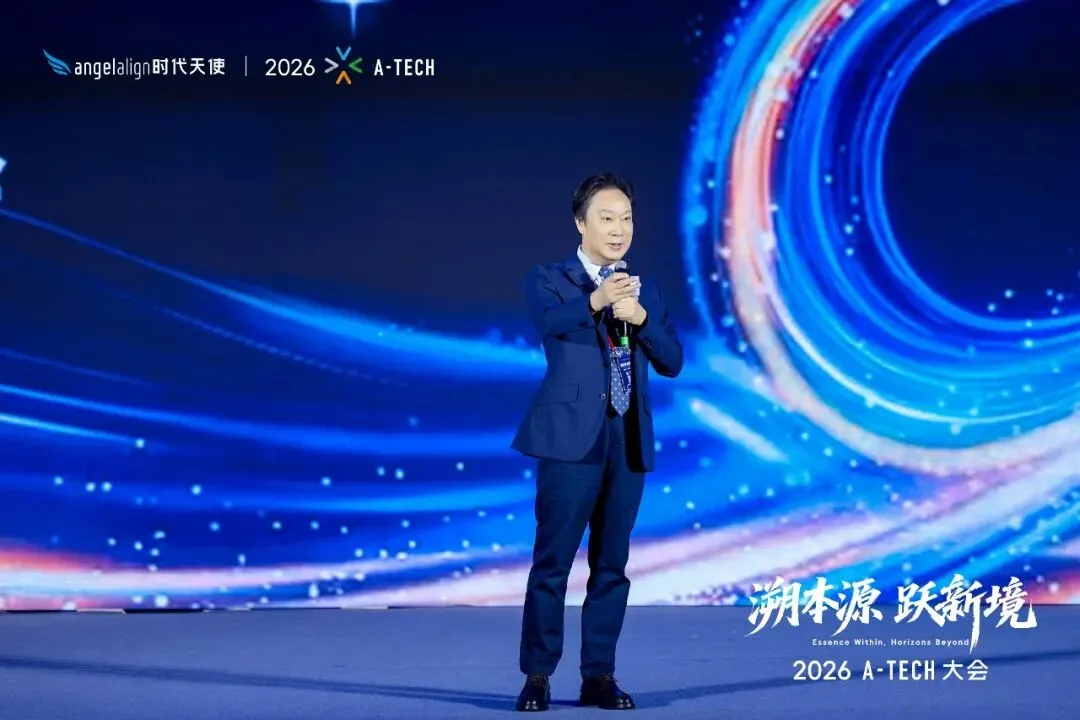 |
| Professor Cai Bin |
对没能到现场的医生来说,这三款新品真正值得记住的,是它们各自接住了一个个具体的临床难题——而这,正是医生每天要面对的事情,也是这个赛道所有参与方共同的“课题”.
| About DGN:DentalGoodNews (DGN) is a trusted professional media platform dedicated to the global dental industry. We deliver in-depth coverage of corporate news, policy & regulation, investment & funding, and clinical frontiers — serving dental institutions, device manufacturers, investors, and industry researchers worldwide. Contact us: haodeya@dongxizixun.com |

;)