New Study: Late Weaning and Pet Contact May Be Associated with Dental Caries in Preschool Children.
 |
| Source: Factors Associated With Parent-Reported Caries in Preschool Children From the KUNO-Kids Health Study - Repeated Cross-Sectional Analysis |
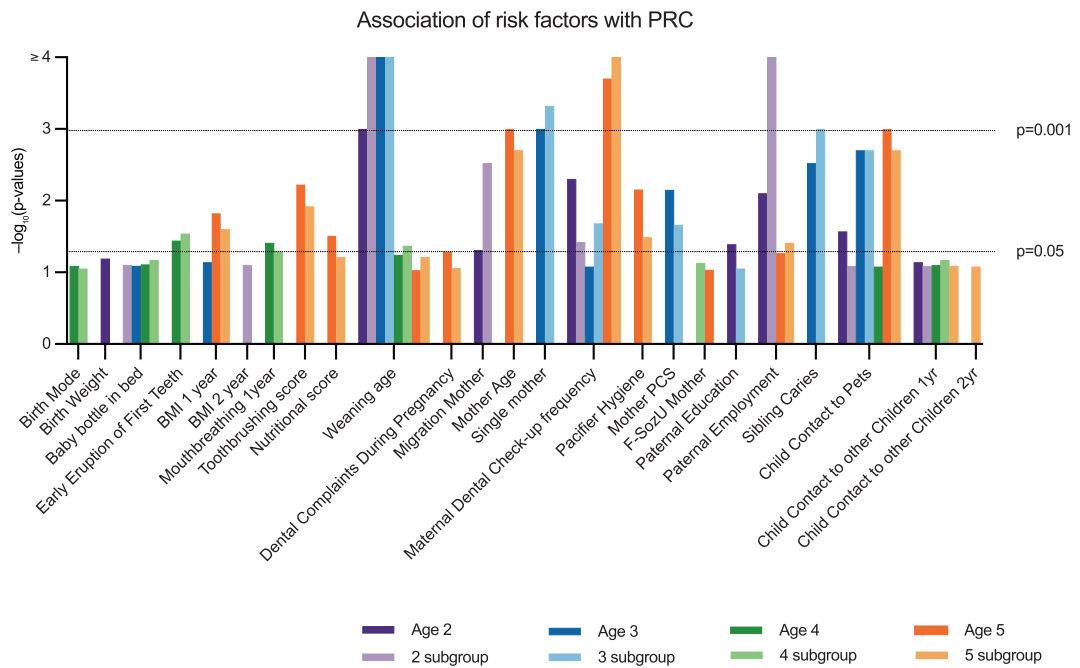
DentalGoodNews|In June 2026, a repeated cross-sectional study (n=3196) published in "Community Dentistry and Oral Epidemiology" showed that weaning after 24 months and contact with pets were the factors most consistently associated with parent-reported caries (PRC) among preschool children.
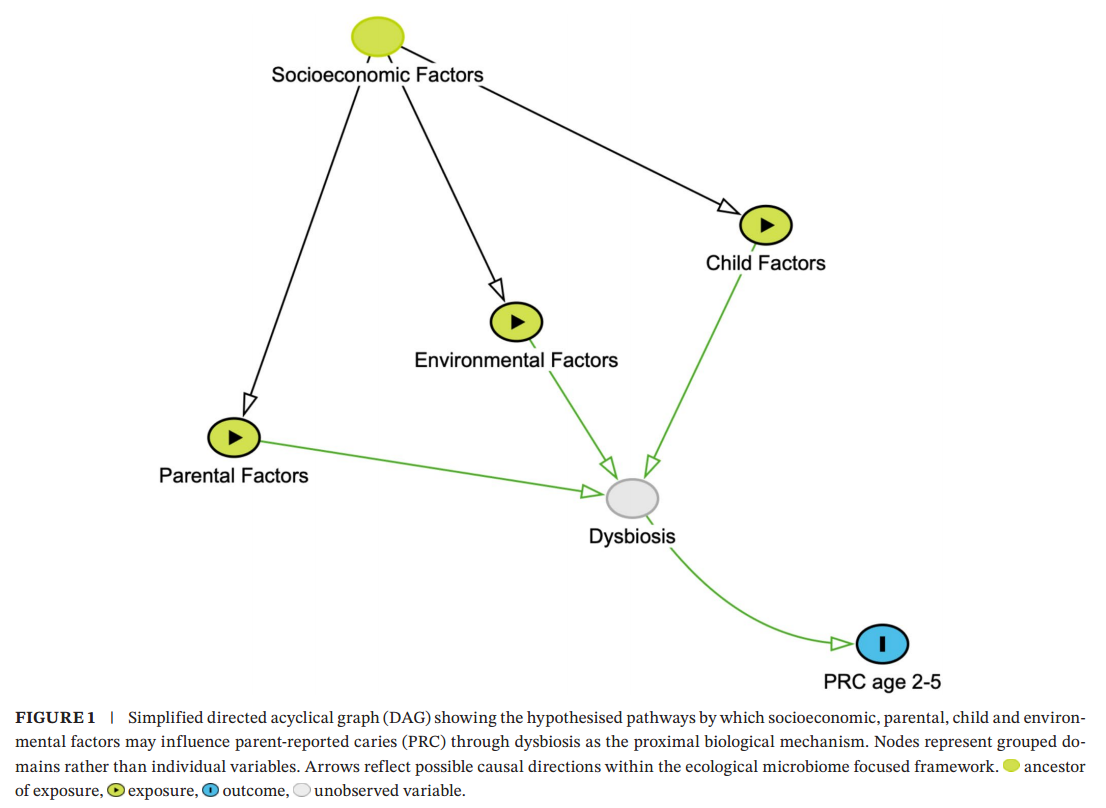
The study, led by the team of Áine M. Lennon from the University Hospital Regensburg in Germany, was based on the KUNO-Kids health research cohort, including families of newborns recruited between 2015 and 2020 in Regensburg and surrounding areas. Questionnaires were collected at different child ages (2, 3, 4, and 5 years), and repeated cross-sectional analyses were used to assess parent-reported caries. The sample sizes for PRC analysis were 1296 at age 2, 1276 at age 3, 993 at age 4, and 768 at age 5; samples at each age point were independent, with the cohort covering a total of 3196 families.
 |
| Source: Factors Associated With Parent-Reported Caries in Preschool Children From the KUNO-Kids Health Study - Repeated Cross-Sectional Analysis |
Data showed that the rate of parent-reported caries in children gradually increased with age: 0.4% at age 2, 1.3% at age 3, 2.7% at age 4, and 4.4% at age 5. Among the subgroup that had visited a dentist in the past year, the reported rate was slightly higher, reaching 4.7% at age 5.
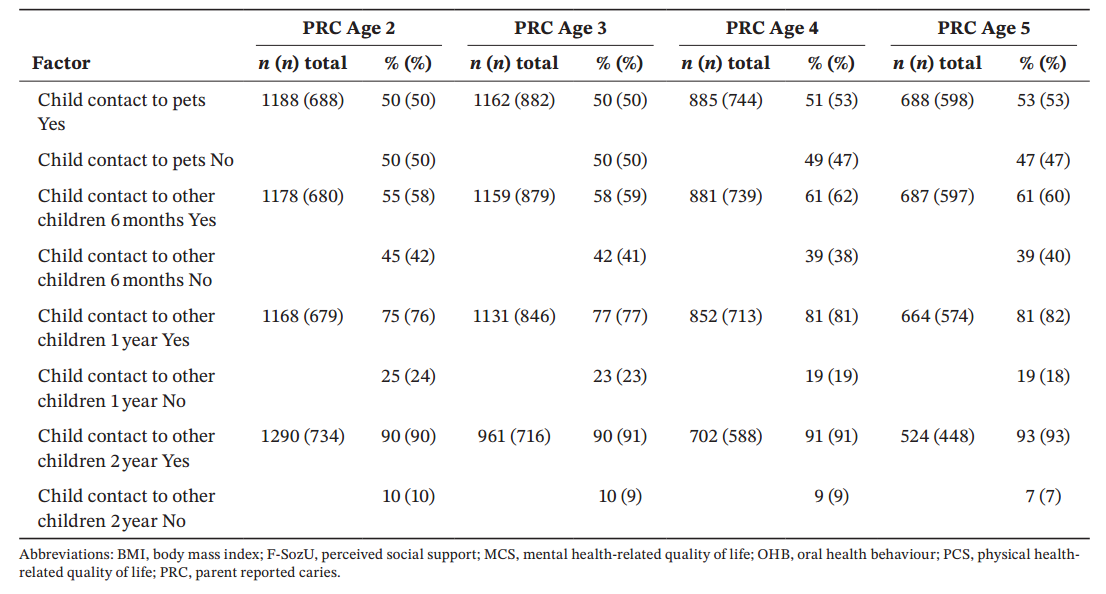
In the study, weaning after 24 months and household pet contact showed relatively consistent associations across different age groups. Researchers discussed possible mechanisms, but these remain hypotheses and have not been verified: late weaning may be related to an extended window of carbohydrate exposure in the child's oral cavity; pet contact may be associated with differences in household microbial composition, thereby affecting the child's oral microecology.
 |
| Source: Factors Associated With Parent-Reported Caries in Preschool Children From the KUNO-Kids Health Study - Repeated Cross-Sectional Analysis |
According to previous reports by DENTALGOODNEWS (Leading Dental Industry Media, DGN), perinatal factors such as maternal vitamin D levels during pregnancy are also correlated with the risk of early childhood caries, with studies showing that children of pregnant women with insufficient vitamin D have a higher risk of tooth decay. This study from the University of Regensburg further suggests that postnatal environmental exposure factors may be associated with the risk of primary tooth decay in preschool children.
Currently, the World Health Organization (WHO) has released its first guideline on "Environmentally Sustainable and Minimally Invasive Oral Healthcare for Caries Prevention and Management," emphasizing the integration of preventive oral care into universal health coverage systems. The newly reported environmental factors such as pet contact identified in this study provide clues for subsequent mechanistic research and risk assessment.
Additionally, the study identified risk indicators for specific age groups. At age 2, maternal migration background, lower paternal education level, paternal unemployment, infrequent maternal dental check-ups, late weaning, and pet contact were associated with PRC; at age 3, single-parent family, maternal health-related quality of life score, late weaning, sibling history of caries, and pet contact were associated; at age 4, early tooth eruption and mouth breathing habits at age 1 were linked to increased risk; by age 5, poor diet and brushing behavior at age 2, younger maternal age, low BMI at age 1, infrequent maternal dental check-ups, pet contact, and pacifier hygiene habits all showed associations.
Researchers emphasized that due to the observational nature of the study design, causal relationships between the above factors and dental caries cannot be directly confirmed. Furthermore, the study has certain limitations: all caries data were based on parent self-reports, which may underestimate the true caries rate; additionally, pet exposure was only recorded based on whether the household had a pet, without further distinguishing pet type, contact frequency, or specific microbial pathways. The conclusions still require validation through subsequent longitudinal and mechanistic studies.
| About DGN:DentalGoodNews (DGN) is a trusted professional media platform dedicated to the global dental industry. We deliver in-depth coverage of corporate news, policy & regulation, investment & funding, and clinical frontiers — serving dental institutions, device manufacturers, investors, and industry researchers worldwide. Contact us: haodeya@dongxizixun.com |

;)